
OUR SERVICE
Chakra Balancing
What are Chakras?
In Sanskrit, the word “chakra” means “disk” or “wheel” and refers to the energy centers in your body. These wheels or disks of spinning energy each correspond to certain nerve bundles and major organs.
To function at their best, your chakras need to stay open, or balanced. If they get blocked, you may experience physical or emotional symptoms related to a particular chakra.
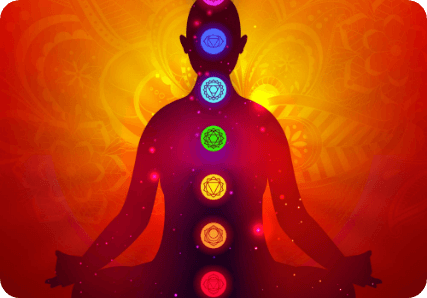
There are seven main chakras that run along your spine. They start at the root, or base, of your spine and extend to the crown of your head. That said, some people believe you have at least 114 different chakras in the body.
What are the types of Chakras
- Root Chakra (Muladhara)
The Muldhara, or root chakra, represents our foundation. On the human body, it sits at the base of the spine and gives us the feeling of being grounded.
When the root chakra is open, we feel confident in our ability to withstand challenges and stand on our own two feet. When it’s blocked, we feel threatened, as if we’re standing on unstable ground.
- Solar Plexus Chakra (Manipura)
The third chakra, the solar plexus chakra, speaks to your ability to be confident and in control of your life. Think back to the last time you had butterflies or felt a pit in the stomach: That’s the Manipura chakra at work.
If your solar plexus chakra is blocked, you might feel overwhelming amounts of shame and self-doubt. Those with open sacral chakras are free to express their true selves.
- Sacral Chakra (Swadhisthana)
The Swadhisthana, or sacral chakra, helps inform how we relate to our emotions and the emotions of others. It also governs creativity and sexual energy. Those with a blocked sacral chakra could feel a lack of control in their lives.
- Crown Chakra (Sahasrara)
The Sahasrara, or crown chakra, the highest chakra, sits at the crown of the head and represents our ability to be fully connected spiritually. When you fully open your crown chakra—something very few people ever do!—you’re able to access a higher consciousness .
- Heart Chakra (Anahata)
The Anahata, or heart chakra, is the bridge between the lower chakras (associated with materiality) and the upper chakras (associated with spirituality). As the name suggests, this chakra can influence our ability to give and receive love—from others and ourselves.
Someone with a blocked heart chakra will have difficulty fully opening up to the people in their life. If someone’s heart is open, they can experience deep compassion and empathy.
- Throat Chakra (Vishuddha)
The Visudhha, or throat chakra, gives voice to the heart chakra and controls our ability to communicate our personal power.
When it’s functioning at full capacity, it allows us to express ourselves truly and clearly. Someone with a blocked throat chakra will feel like they have trouble finding the words to say how they truly feel.
- Third-Eye Chakra (Ajna)
As we move up the body, we’re getting closer to communion with the divine. The Anja, or third-eye chakra, controls our ability to see the big picture and connect to intuition. Think of it as the eye of the soul: It registers information beyond the surface level.
Visions and intuitive hits are not uncommon for someone with an open third-eye chakra.
What are the benefits of Chakra Balancing
The treatment aims to identify any possible blockages in the guest using crystals, essential oil blends, massage, and energetic techniques. The aim is to release any chakra blockages and promote a free flow of energy to restore balance and a sense of well-being. By balancing your Chakras, you may be able to:
- Remain calm in your everyday life
- See challenges for what they are and not be as affected by them.
- Overcome past life experiences which could have left their mark on you.
- Help others without their problems affecting you.
- Develop confidence, energy, freedom,and happiness to feel good about yourself and life every day
How To Tell Your Chakras Are Blocked
There are a few ways to tell if your chakras are blocked. You know your own body, and one of the most common symptoms is feeling out of balance or not feeling grounded in one part or your whole body. Other signs that your chakras may be blocked include physical problems in the area that corresponds to the chakra, difficulty sleeping, anxiety, stress, sore throat ,and depression. If you’re experiencing any of these symptoms, then we suggest working on opening your chakras!
How To Balance Your Chakras: 4 Different Ways
- Tapping
- Stretching
- Meditation
- Yoga
Frequently Asked Questions


Breathing exercises and relaxation meditation can help you reach this alignment. A yoga pose for a corresponding chakra can also open and balance it. While specific postures and breathing can keep your body balanced, guided meditations can align your mind.
How do you balance your chakras on your own?

